
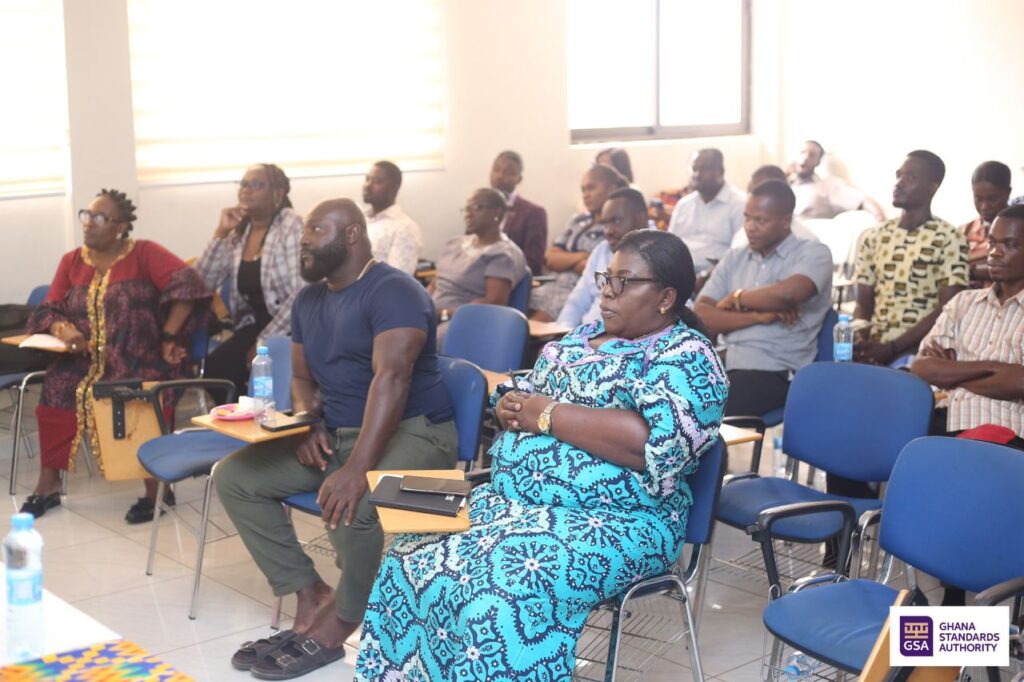
The Ghana Standards Authority (GSA), through the Fish Inspection Department, hosted an Annual General Meeting for land-based fish processing establishments at its Head office on Tuesday, April 28, 2026.
The meeting, which assembled industry stakeholders and GSA officials, was convened to address evolving international requirements, and focused on the European Union’s implementation measures under its regulation (EU) 2019/2129, establishing rules for the uniform application of frequency rates for identity and physical checks on certain consignments of animals and goods entering the Union.
It provided a platform to clarify recent updates from the European Union, review Ghana’s performance at EU Border Control Posts (BCPs), examine implications on approved establishments and exporters, and identify collective actionable solutions. The forum sought to strengthen collaboration between the Competent Authority (CA), the Fish Inspection Department, and industry stakeholders.
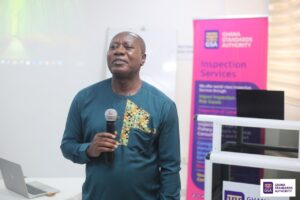 The Deputy Director-General in charge of Conformity Assessment (DDG-CAS), Mr. Kojo Eshun, who opened the meeting, described the gathering as a reunion and commended the stakeholders in the fish processing sector for their commitment to establishing, implementing, and maintaining food safety systems, Prerequisite Programmes and HACCP, that meet global standards.
Mr. Eshun encouraged participants to engage actively and raise critical questions, expressing optimism that all challenges could be overcome through collective effort.
Mrs. Genevieve Baah-Mante, Director of the Inspectorate Directorate, congratulated Ghana’s fish industry for its hard work. She stressed that the Department’s responsibilities extend beyond routine checks to supporting approved establishments in consistently meeting regulatory and international requirements, particularly those of the EU.
The Head of the Fish Inspection Department, Mrs. Gloria Osei, in delivering her remarks, stated that: “As we deliberate today, our goal is to ensure that Ghana maintains and improves its compliance status, reduces adverse inspection burdens, and sustains its position as a reliable exporter of safe fishery products to the European Union.”
On the issue of capacity building, she introduced new inspectors to the department and explained that they were undergoing structured training and mentorship as per the requirements of ISO/IEC 17020 which the department is accredited to. Mrs. Osei, later updated stakeholders and management on the review of fish inspection activities from 2025 to date.
Mrs. Hannah Akoto Essel of the Fish Inspection Department held an interactive session on the regulation (EU) 2019/2129. She explained the regulatory requirements covering consignments and their implications for the approved export companies and the country.
The meeting concluded with a detailed and insightful question-and-answer session, during which the various Interested Parties within GSA were present and available to respond directly to questions addressed to them, allowing participants to seek clarity on compliance issues and regulatory expectations.