
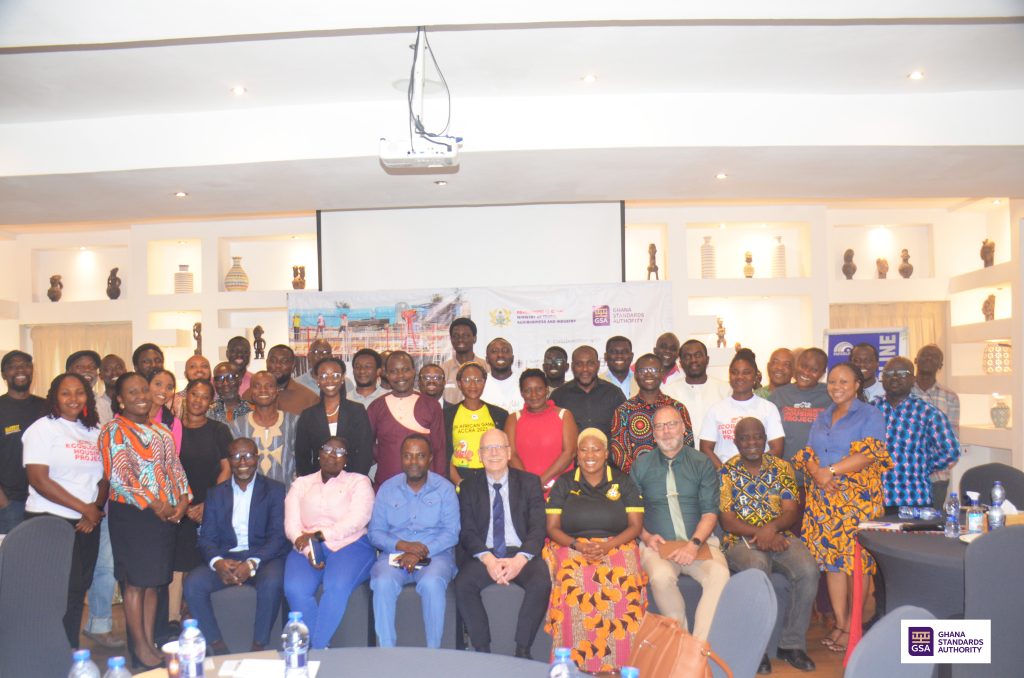
The Ghana Standards Authority (GSA) has warned that companies that failed to comply with construction standards would face the full rigors of the law.
The Authority said it would continue to strengthen testing procedures in the construction sector and review standards to ensure they were fit for purpose.
Mr. Samuel Abdulai Jabanyite, Deputy Director-General in charge of General Services at the GSA, made this known at a stakeholder dialogue on concrete development in Accra.
It was held under the theme “Integrating Standards, Cementitious Materials, and Concrete Technology for Good Construction Practice.”

Mr. Jabanyite explained that collaboration between GSA and BAM, a German research institute, had enhanced the technical capabilities of staff and led to the development of a handbook for safe and durable construction in Ghana.
He said that the Authority was working with BAM and Koforidua Technical University to explore the use of agricultural waste such as groundnuts husks, rice husks and sugarcane waste in cement production.
Mr. Jabanyite said Ghana’s infrastructure agenda required the use of quality concrete to ensure safety and standards.
“Concrete is the backbone of modern construction. The dialogue is a collective response to addressing challenges in the sector,” he stated.
Mr. Jabanyite noted that the Authority would continue to enforce standards and equip companies with tools to protect consumers from poor structures.
Dr. Wolfram Schmidt, Senior Researcher at the BAM, emphasized the importance of collaboration in modernizing standards in the built environment to ensure compliance and innovation.
A senior lecturer at Accra Technical University, Dr. Nana Benyi Ansah, said public test laboratories were essential to quality infrastructure and credibility of standards. “We do not have to treat laboratory modernization as an administrative upgrade but as a national infrastructure priority,” he said.
Madam Sarah Acheampong, Head of Production at Regimental Concrete Products, stressed that the quality of concrete could not be compromised.